Add to Technorati Favorites
I would encourage you to do something every week to help with your personal preparedness. Learn something, buy something, teach something or do something. Doing a little each week will pay off .

Saturday, May 29, 2010

Our Family Meetings - Change

I would suggest you form your own family organization for this. We don't talk alot about it in our ward or stake and it is something that needs to be discussed on a regular basis because there is so much to learn and do - one lady after seeing a presentation I did said, "This is really a science isn't it?" She said in a nutshell what I have felt. I will be forever grateful for that comment.

Our monthly phone meetings about preparedness are working to keep this in everyone's thoughts, but we have discovered because we are in 5 locations it is a bit of a struggle to talk about 4 topics each time. (Original Post about our Famly Meetings ) We are changing this to one topic in depth each meeting.

Each person is a chairman of an area. That person will make assignments within their area to the rest of us. We have also felt that we need to focus on skills for a while, we will cover the food in detail later. Everyone is currently gathering and so it isn't as much of a rush to learn more about that.

This Month
June 6th Call 6:30 p.m. MST
Subject - Water
Water Chairman - Dad

Mesha/Jeff - Sterilizing water from river, rain, etc
And/Brent - Water needs 72 hour kit, car kit, first aid kit, household & how much clorox, boiling, etc to purify
Jonathan - What can be used in addition to water to drink and ideas to extend cleaning with water
Kalea/Ben - How much water is needed for daily tasks for adults, children, babies.
Shay/Casey - Storing Water, container ideas, saving containers for each other - do we need to do that to help out?

Thursday, May 27, 2010

Living on Food Storage - Have you ever done it?

This has been a slow winter for our business and my husband has been ill so we have had medical bills to take care of. Long story short - I haven't bought groceries since the holidays. I have spent about $30.00 a month of fresh veggies and dairy products. If we were in a situatio where there were no grocery stores I would sprout and use my powdered dairy products.
This is always a good experience for me to do, I learn what we are short on. We are finally to a place where we aren't short on abything - well for at least 5 months anyway. I do have some things to replace but that will be easy!

We have been so blessed to be directed by the spirit to get our house in order for any disaster - our disaster so far has been occasional lack of paydays.

Challenge to the reader ------->
Do not buy groceries for a while - notcie the things you run out of and don't have any in your house - it doesnt' take ver long to see what you need to gather!

Sunday, May 23, 2010

What did I do this week for preparedness


Everyweek I do something for preparedness. This week I studied. It has been rainy/snowy/ windy and very cold. I have had a lot of time to study and it has been glorious!

.What did I study?

The current events in Isreal. Fascinating to see all that is happening now.

Signs of the Times.

The Second Christmas! That is what we are waiting for!

I am not going to share any opinions on all of this - that is for each of us to discover. But I would encourage you to make some regular time to study this out. Pres Hinkley asked us to do it several years ago in conference. It is a fascinating and motivating study!

If you haven't started this study yet, the book, "Coming of the Lord" by Gerald Lund is a great place to start. Pres. Hinkley also suggested, D&C 29 & 45, Revleations, Daniel and other scriptural books with prophesies in them.

Have a great week!

Tuesday, May 18, 2010

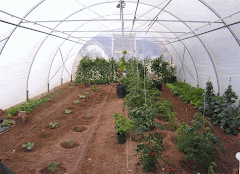
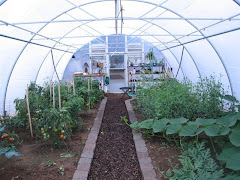
Our Garden Is Plowed! WOO HOO!!!


Just have to share - our garden is ready to be planted. Isn't the dirt so lovely!!! I will be posting more as the summer goes by about our garden - this is the main place I spend my time during the warm time of year here.
DId you know that for every $100 you spend on seeds, fertilizer, etc. you save apx $1500???? That is a huge savings!

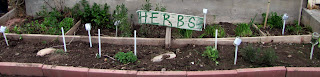
Herb Garden

The weather is finally getting warm here! Yesterday I did the cullinary herb garden. (I haven't finished the medicinal garden yet.)

I try to grow most of my herbs/spices for our yearly seasonings needs. It is amazing how much of this stuff you can fit in a small space. We have the following planted in our cullinary herb bed:

  1. Basil
  2. Parsely
  3. Thyme
  4. Sage
  5. Rosemary
  6. Chives
  7. Oregano
  8. Marjoram
  9. Garlic
  10. Dill

They are all heirloom variety so I gather seeds and use them for the next year on the plants that aren't perenials.

A little info about some of the herbs listed

Saturday, May 8, 2010

2 - The Worst Has Happened - Are You Prepared?


Allan Wright

Level: Basic

A disaster has occurred in your home, in your neighbourhood, in your city or your state. Being prepared for a disaster, before it happens, will help you and your family through the danger when it does occur.Evacuation:1.An Immediate risk to you and your Family: If you smell gas, smoke or see fire in your home, evacuate everybody immediately. Do not call for help from inside your home or go back to retrieve an item. In an emergency of this type, only the lives of your family are important. , Call 9-1-1 and report the emergency only from a safe location.2. Official General evacuation orders: If local officials issue general evacuation orders, immediately prepare to leave your house.· Wear sturdy shoes, long-sleeve shirts and pants.· Bring your Go-bag.· If you have a pet, make sure it is wearing a collar, use a pet carrier labeled with your name and the pet's name. Bring your pet's Go-bag.· Lock your home and shut off the water and electricity, but leave gas on unless instructed otherwise.· Leave a note and tell a neighbor where you are going.· Use the evacuation routes and methods specified in the evacuation order.· Carpool with neighbors whenever possible.· Once you arrive at a safe location, call your out-of-area emergency contact. This is a person that you know and have previously designated as your emergency contact person. All family members should call this person as soon as they in a safe location.Disaster Shelters:Immediately following a large disaster, suitable shelter sites will be selected from a list based on areas of need and estimated numbers of evacuees. Because each site must be inspected prior to being opened, it is not possible to say, which sites will actually be opened then a disaster does strikes .As soon as disaster sites have been designated, their locations will be announced by your local news media. If you do not have an alternative, evacuate to a designated emergency shelter.· Tell your out-of-town-contact where you are going.· Take your Emergency Kit (First Aid kit and Go Bag) with you to the shelter.· Initially, emergency shelters may not be able to provide basic supplies and materials. Consider bringing extra items (e.g. blanket, pillow, air mattress, towel, washcloth, diapers, food and supplies for infants.)·Provide for your pet: Only service animals are allowed in "human" shelters. If you cannot make other plans for your pets, Animal Care staff will be available at "human" shelters to help with pet sheltering needs.Electrical Power Failure: Power cuts can occur due to blackouts, extreme weather conditions, or can accompany other disasters such as earthquakes or terrorism. If there is no power in your neighborhood:· Turn off and unplug appliances and computers. Leave one light on to indicate when power has been restored.· Avoid using regular wax candles; they are fire hazards.· Do not use a gas stove for heating or operate generators indoors (including the garage.) Both can cause carbon monoxide poisoning· If traffic signals are not working, treat them like a stop sign.Earthquake:If you are indoors when shaking starts:· Get on the floor, cover your head and hold on. If you are not near a strong table or desk, drop to the floor against an interior wall or doorway and cover your head and neck with your arms.· Avoid being under or near windows, hanging objects, mirrors, tall furniture, large appliances and cabinets filled with heavy objects.· Do not try to exit the building during strong shaking.· If you are downtown, it is safer to remain inside a building after an earthquake unless there is a fire or gas leak. Remember that there are no open areas in downtown San Francisco far enough from glass or falling debris to be considered safe. It may be the same in your town.· Broken glass from high-rise buildings can travel great distances when caught by the wind.· If you are in bed, stay there and cover your head with a pillow.· Do not use elevators during or after a quake.· If you are in a wheelchair, lock the wheels and cover your head.If you are outdoors when shaking starts:· Move to a clear and open area if you can safely walk. Avoid power lines, buildings and trees.· If you're driving, pull to the side of the road and stop. Do not stop under an overhead hazard.· If you are on the beach, move to higher ground as soon as possible. An earthquake can cause a tsunami.Once the earthquake shaking stops:· Check those around you for injuries and provide first aid to the injured. Do not move seriously injured persons unless they are in immediate danger.· Check around you for dangerous conditions, such as fires, downed power lines and structure damage, before you move.· If you have fire extinguishers and are trained to use them, put out small fires immediately.· Check your phones to be sure they have not shaken off the hook and are tying up a line.· Turn off the gas supply only if you smell gas.· Inspect your home for damage.If you are trapped in debris and can not free yourself:· Move as little as possible so that you don't kick up more dust. Cover your nose and mouth with a handkerchief or piece of clothing.· Tap on a pipe or wall so that rescuers can hear where you are. Use a whistle if one is available. Shout only as a last resort.Severe Storm / FloodingSevere storms can cause landslides, flooding, uprooted trees, and downed utility lines. Be aware of these potential dangers in and around your neighborhood.· Tune to local Radio/TV channels for emergency information and instructions.· If you are asked to leave your property, shut off electric circuits. If advised by your local utility, shut off gas service as well.· If water has entered your garage or basement, do not walk through it - it may contain hazardous materials.· Never try to drive over a flooded road. This one mistake is the major cause of death during and after severe flooding.· If your car stalls, abandon it immediately. Attempting to move a stalled vehicle in flood conditions can be fatal.· Do not walk through moving water. Unexpected water depth and current can carry you away. If you must walk in water, walk where the water is not moving and use a stick to check the ground in front of you.· Stay well clear of downed power lines.· Do not allow children to play around fast moving water, storm drains or flooded areas.I hope that this information will help you and your family through any emergency situation that you may encounter.Remember, and I cannot stress this enough, nothing can help you and your family through a disaster as much as being prepared before it happens. Mr. Wright has been well recognized in the field of wholesale and retail products for over 24 years. He is now the V.P. and Project ...Article Word Count: 1143Allan WrightFirst Aid Kit Productshttp://www.firstaidkitproducts.comArticle Source: http://EzineArticles.com/?expert=Allan_WrightAllan Wright - EzineArticles ExpertAuthor

ow to Protect Your Family With Pre-disater Planning - Emergency Preparedness Plan

Mo Plante


There are many steps that can be taken to prevent harm to your family when a disaster strikes. The primary key to ensuring the safety of your family is to plan ahead. While every disaster is different the steps that need to be taken for safety purposes are very similar.A simple cycle will help prepare you and your family for what needs to be done. This cycle includes four easy step, planning, testing, practice, and maintenance.The first portion of this critical cycle is of the utmost important. It is planning an evacuation or reaction plan appropriate for the natural disaster. If a fire was to take place in your home an evacuation plan would be more suitable while if a hurricane was approaching a safety plan directed at the in home safety would prove to be more valuable.For this reason, it is advised that an evacuation plan and severe weather plan be created. A few things to remember when creating your emergency plan is to designate a single location for all the family to seek out when an emergency arises. This will make is easy to account for all family members and help save valuable time in trying to move the family to a safer location.Secondly, this plan needs to be discussed on a regular basis with the whole family to make sure everyone understand the plan and also knows the importance of following the plan and not deviating from it.


Finally, a good way to help refresh younger members of the familys memory is by posting your emergency plans on the refrigerator and in their bedrooms. That way there in a stressful situation when it is time to implement these plans they can easily be located and followed.Before the final plan is put into place, it is important to test the plan and make sure that it is effective and can be accomplished by all family members. This is especially important when smaller children or elderly are within the home. The designed emergency plan should be tested under various pretend emergencies to make sure it is suitable for all major emergencies or to let you know that the plans need to be revised under certain circumstances.Now that the plan has been designed, tested, and ready to be used in case of emergency, it is time to remind all the members of the family of what needs to be done. We never want an emergency to occur, but when it does it is time to get down to business. To make sure there is no delay in family response, a monthly test should be run. This way all the procedures stay fresh in everyone's mind. So when that emergency does occur there is no doubt that everyone knows exactly what they need to be doing.Finally, the last part of the cycle is maintenance.


The portion is just as important as the first. The reason being for maintaining your emergency plans is that sometimes house layouts change, family members switch rooms, or they simply become ineffective.This is also a good time to check those first aid kits and emergency supplies such as bottled water, canned goods, and conditions of the home.An emergency plan should be evaluated annually to make sure you and your family are doing all that they can to stay safe in a state of emergency.This cycle will help keep you and your family safe.Just remember those four easy steps: planning, testing, practicing, and maintenance. Following those rules will make sure your plans are not haphazard and will keep your family safe.Check our site for the tools to protect your self and more Survival InformationSurvival KitsArticle Source: http://EzineArticles.com/?expert=Mo_Plante

Making Bread - With or Without a Mixer


Hooking UP with Show and Tell Friday - be sure and check out all the other great bloggers for this fun event http://romantichome.blogspot.com/2010/05/show-and-tell-friday_13.html


I love to make homemade bread - I haven't always felt that way. Several years ago I made it occasionally, then our daughter developed a soy allergy and I had to start making it all the time. It was ardous when I started. Seemed like it took forever and I would get overwelmed when I did it. I kept experiementing with recipes and finally figured out my own. I simplified and simplified and now I have a great bread recipe, memorized, and it even won a "Gooseberry Cooking Contest." It is a recipe that can be made with or without a mixer.

Step One - Mix
3 Tbsp sugar
1 Tbsp salt
1/4 cup oil
2 cups warm milk or equivalent pwd milk
3 cups white flour (or can do all whole wheat if your tummies are used to it)
  • Note - very important to mix this well - if you get your gluten going you don't have to knead it as much in the next step. This is easy to beat with a spoon if you didn't have a mixer.

  • Step Two
    Mix 1 Tbsp yeast in 1/2 cup warm water
    When dissolved add to above mixture
    • Note mix this in well

    Step Three
    Add 4 cups whole wheat (or white) flour mix until mixed in.

    Step Four
    Cover and place in warm place until raises to double
    Punch down and let raise again
    *Note - this double raising helps it to be really nice and fluffy

    Step Five - Preheat Oven to 425* Grease pans and place dough in pans, let raise until double

    • Note - I put them on the stove covered with a towel while it the oven is heating up to bake the bread

    Bake at 400* for 5 mins/ Then at 375*for 5 minutes/Then at 350* for 20 minutes. If they need to be browner, bake an additional 5 mins at 325*.


    Pull out of oven. Cover with towel for about 10 mins, They should slip right out of a greased pan. Put them in a ziplock bag and seal it for 30 mins. If there is moisture after 30 minutes, wipe it out and reseal.

    • This will make your bread nice and soft. You dont' have to butter the top to keep it soft.
    This is a great recipe and so easy to do. I can mix it up in 5 mins.
    Have a great week!

    Saturday, May 1, 2010

    Cooking with Your Storage Items


    It is vital that we all learn how to cook with the items we have stored. In order to do that we must have a collection of recipes that will work using our storage items.

    Challenge this week for all of us

    Gather your preparedness recipes and look at them to see which ones are really usable for your family and organize them

    1. If there are recipes in your stack of papers that you will never use, get rid of them, clean this out.
    2. Divide them into appropriate categories
    3. Put them in a file folder or binder so they are ready to be used.
    4. You probably have recipes that you use now that can be used. If you don't want to write the entire recipe out, make a list of those recipes and put them in the appropriate section.
    Practice cooking - a few ideas:
    1. If you use a pancake mix, make pancakes from scratch.
    2. Make some granola - it is a great snack or breakfast
    3. Choose a recipe you use that is a ready to eat recipe and adapt it to using your storage items.
    4. One day a week practice cooking a recipe that is totally using storage items so you can see what items you may be missing and your family can get used to the changes.
    Several years ago one of our daughters was diagnosed with a soy allergy. Soy is broken down and bits and pieces of it used all over ready to eat foods - to preserve or extend it. She was allergic not to the whole soy but to the pieces. (25% of Americans are allergic to different degree's). I cut out all ready to use foods, it was amazing! I didn't use that much I didn't think. but it was a major cultural shock for me as the main chef in our house. I had to learn new cooking skills. It was the best thing that happened to me and us preparedness wise as far as cooking with storage.

    Preparedness is something that is easy to put off doing because it isn't an iminent need. BUT when that need comes and you don't have recipes or resources to use, it will add to whatever crisis you may be in.


    So - your assignment this week.....should you choose to accept it.....
    1 - Organize your storage recipes
    2 - Cook one meal with your storage foods - continue this weekly!!!


    Have a great week!

    Wednesday, April 14, 2010

    Solar LIghts

    ( Picture from Article That Follows)
    I heard about a family who was caught in a disaster without any lighting. They had put solar lights on their walkway up to their front door. The person writing the article said they were inside in the pitch black and there was a glow of light coming in their living room window - when they investigated it was their solar lights. They promptly brought them in their house and used them until their lights came back on.
    It had crossed my mind to use my outdoor solar lights, but I hadn't ever tried them. So after reading this, I turned off my lights and retrieved some of them. They aren't as bright as a lantern or a candle, but they would be a wonderful thing to have as a back up when your other resources were spent. The light isn't really bright but you can see where you are going especially if otherwise it is pitch black!

    I have seen a few sales on them with the spring gardening items, so it would be a good time to invest n them. You can even use them to help with lighting outside right now! I have solar lights that are 5 years old and still shining bright at night.
    ~~~~~~~~~~~~~~~~~~~~~~~
    Here is an article about them:
    Outdoor solar lights uses the identical action to generate power as the solar panels on your ceiling (or that you could set up on your ceiling, if you selected to). Essentially, it applies photovoltaic (PV) cells, which accumulate and switch solar energy into electrical energy. The PV cells apply semiconducting materials to engage the sun’s light, which interacts with the silicon and another components to produce electrical energy. The electrical energy runs over cables which power the battery, which in go powers the light. This is an highly simple explanation, but it will present you the common idea of how solar cells play. They can only make electrical energy from direct sunshine, which is why solar lighting wants a battery in order to be able to light up the dark.
    So that the batteries to keep a constant charge, the solar light fixture should be in a position that meets full sunshine for almost of the daylight. If it just gets partial sunlight, because it’s barred by trees or other construction, or because your area has much of cloudy conditions, the batteries will run out earlier, and your fixture will supply light for a lower amount of time. Most outdoor solar lights fixtures own a backup power system which applies rechargeable batteries. Solar lights fixtures which apply a small amount of electrical energy frequently apply small AA Ni-Cad or NiMh batteries. But more strong solar lights fixtures (like head lights) apply a covered lead acid battery.
    Photo detectors that automatically evaluate light degrees (like the kind that tells your photographic camera when to apply its flash) are constructed into the solar lights fixtures. They monitor light degrees and turn the fixture off at morning and on at nightfall. But get sure there are no artificial light sources (like a street lights or head light) that may contribute a wrong reading and forbid the light from turning on.
    Outdoor solar lights usually utilizes LED bulbs. They apply less power than incandescent bulbs and, with a lifetime of around 20 years, are much longer-lasting. Until lately, solar lights overall has not been as bright as lighting powered straight by direct current electrical energy. But the earliest super bright LEDs can at present illuminate as well as halogen bulbs. http://solarlighting-s.com/outdoor-solar-lights/

    Waxed Cheese

    Information coming.....

    Saturday, April 3, 2010

    90 Days of Lunch

    Other things can be made from these items - need these basic supplies to work with.)

    7 Menu's
    1 - Soup/Sandwiches(Tuna or other canned meat)/Milk or Water/Veggies
    2 - Chile/Toast/Juice
    3 - Grilled Cheese Sandwiches/Veggies/Soup
    4 - Soup/Sandwiches(Tuna or other canned meat)/Milk or Water/Veggies
    5 - Chile/Toast/Juice
    6 - Grilled Cheese Sandwiches/Veggies/Soup
    7 - Chile/Toast/Juice

    4 soups a week x 12 = 48 cans or 2 cases
    3 chile or other type canned meal such as stew etc x 12 = 36 cans or case and 1/2
    Canned Tuna or other canned meat - 2 per week x 12 = 24 cans
    Grilled Cheese - 1 lbs a week (waxed cheese - 1 lb a week x 12 = 12 lbs
    Veggies - in season - use garden/ out of season, sprouts or canned - 4 meals x 12 = 48 cans or 2 cases
    Bread Makings for each day = 3 loaves for the week (see breakfast for item list)
    Fruit Juice - 3 times = 1 bottle of 64 oz per day ( 64 oz = 8 cups) (need fruit juice for nutrition not just a drink mix) = 3 x 12 = 36 bottles or 3 cases (12 in a case)

    Saturday, March 27, 2010

    Doing a 90 Day Meal Plan - BREAKFAST


    It has been suggested that we get not only long term storage, but a three month supply as well. this is what is said in the Family Home Storage Pamphlet - a full copy is at http://www.providentliving.org/ .

    THREE-MONTH SUPPLY
    Build a small supply of food that is part of your normal, daily diet. One way to do this is to purchase a few extra items each week to build a one-week supply of food. Then you can gradually increase your supply until it is sufficient for three months. These items
    should be rotated regularly to avoid spoilage.


    In our family meeting in March this was one of the items discussed. I was in charge of this part so I made up 90 days of menu ideas. In this post I am sharing my breakfast menu ideas.

    I made up a list of 7 menu's and I figured out how much would be needed per meal then times that out by 12. These menu's aren't set in stone, but they do give me the needed supplies to make a wide variety of breakfast menu's as long as I have the basic supplies.

    Right now this is for 3 people who are here at the house living. Obviously it would need to be adjusted if more or less are living here!

    Oatmeal or Hot Cereal/Toast/Fruit/Milk (2 times per week)
    3 boxes of oatmeal, one box powdered milk or evaporated milk, 1 carton honey, dried fruit, bread supplies***
    Pancakes/Tang Drink or Juice/Fruit (2 times per week)
    2 boxes complete mix, 2 bottles syrup, 1 container tang, 12 pints canned peaches
    Cold Cereal/Toast/Yogurt/Tang
    6 boxes cold cereal, 1 package rennet, 1 box powdered milk, canned or dried fruit for yogurt, 1 pkg tang
    Breakfast or Coffee Cake/Hot Chocolate/Fruit
    12 packages muffins to make into cake or br. cake supplies, 12 dried or 12 pints canned fruit, 6 packages hot chocolate
    Muffins/Canned Ham or Bacon/Hasbrowns/ Hot Chocolate
    12 pkg ready to mix muffins, 12 cans meat, 1 pacakge dried hashbrowns, 6 packages hot chocolate, use meat fat to cook hashbrowns

    TOTAL:
    24 pkg muffin mix
    12 cans meat
    24 pints canned fruit or dried fruit equivalent
    12 pkg hot chocolate
    2 pkg Tang
    2 pancake mix boxes
    2 bottles syrup
    6 boxes cereal
    3 boxes oatmeal (or instant equivalent)
    1 box powdered milk
    1 pkg rennett
    1 carton honey
    1 gallon package dried hashbrowns
    Bread making supplies includes for 2 loaves of bread a week for breakfast meal (Other meal amounts with that respecitve meal - not every breakfast meal has bread)
    8 cups flour per week = 32 cups = 16 lbs.
    1/2 cup pwdered milk reconstituted into 2 cups = 2 cups powdered (add to milk above)
    1/4 cup oil x 4 = 1 cup
    1 tbsp salt x 4 = 4 Tbs
    3 Tbsp sugar x 4 = 12 = 1 cup
    1 tbs yeast x4 = 4 tbsp

    Saturday, March 20, 2010

    Solar Cooking


    I have been studying about new methods of solar cooking. I realized I need to know this skill much better than I do. I pretty much just dabble with it and I need to know it as a skill.

    When doing research I came upon this blog by "Sloar Oven Chef" she started last year and cooking everyday it is sunny in her solar oven. This is about her journey - her successes and failures. She shares what she learned from the failures. It is a great read.
    http://solarovenchef.blogspot.com/

    This site explains how to make a solar oven from a windshield shade that is pictured above:
    http://www.solarcooking.org/plans/windshield-cooker.htm

    I have learned alot, still have more research to do on this...most important is I need to practice.
    I am in Idaho and the weather is pretty finicky right now, but when it levels out, I am going to cook every sunny day this summer, so I can learn how to do this.

    Saturday, March 13, 2010

    Organizing Non Food Items

    My Herb Storage Shelf
    We have a bathroom in our basement that is huge - not sure why it ws made that way, but it is bigger than any bathroom in the house and all it has is a potty and a sink. There are lots of shelves there so I use it for our non food storage. As I am deep cleaning our house my number one goal is to get it all put together so the preparedness items are available to use. I have had things all over the house. So I put in the repective area's a couple bars of soap and the rest in the storage area, two tubes of toothpaste in each bathroom and the rest in storage. I have a better idea of what we have and what we need.

    One thing I do as far as inventorying our food is once a case is opened it is off the food storage list and added to the "need to buy" list. I just adapted that to the non food as well.
    To have a successful food storage you need to have a system of inventory that works for you.